Journey to Israel with DISCOVERING NATURAL ISRAEL author Michal Strutin
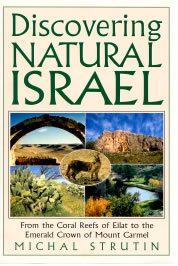


The last time I was in Israel was nearly a year ago, when the last of the living October 7 hostages were released. “Hostage Square,” the plaza that fronts the Tel Aviv Art Museum, was joyous with song, speeches, and huge crowds. Tel Aviv is an easy city to enjoy. I’m traveling to Croatia this fall, a research trip for Book 3 in my upcoming sixteenth-century mystery trilogy. I’d be so close, why not stop and see friends and visit one of Israel’s many natural areas. Talia, my long-time friend, cautioned, “Not now.”
What to do? I had looked forward to roaming natural Israel
again. It’s about the size of New Jersey, yet Israel is amazingly diverse:
mountains, desert, rivers, lakes, forests, highlands, seaside, and the
Mediterranean Sea. For its small size, Israel’s vegetation is more biologically
diverse than most European countries. Why? Israel is where three continents
meet: Europe, Africa, and Asia.
Some years ago, knowing this, I was excited to roam all of
natural Israel for what became Discovering Natural Israel, published by
Jonathan David. I remember standing in the Judean Mountains, at the top of the
trail leading down to Wadi Qelt, thinking every bird, animal, and plant would
be new to me. During my travels, I saw jackals, ibex, two species of gazelle, a
wild ass along the rim of Makhtesh Ramon, a wolf, Egyptian eagles in the
desert, griffon vultures nesting along cliffs in the Golan, smaller birds in
all shades, duchifats (hoopoes), the national bird of Israel, which looks like
a party on the wing. Nearly 600 species of birds live in Israel. Once, driving
south toward the Dead Sea, I saw what I thought was a tornado circling over the
Jordan Rift Valley. As my car got closer, I realized it was a huge “funnel” of
storks, heading south, riding the updrafts. A couple of the world’s major
flyways crosses North-South through Israel.
I saw fields of flowers in spring, an olive orchard with the
trees’ silvery leaves underlain by a red “carpet” of anemone flowers. Nearly
2,900 species of plants, from rare irises to date-palm oases, are native to
Israel. And, along the trail, I met a wide range of people: those who come to
see the land that is gloried in Psalms; people snorkeling among the coral reefs
of the Red Sea; Israelis whose roots lie in the Middle East, Europe, and
beyond; birders from everywhere; Israeli teens on guided outdoor adventures;
botanists; families who invited me to join their picnic; people who told me
their stories.
I’ve returned to Israel many times since then, and always find
time to wander one or two of my favorite trails. Here are a few.
Nahal Amud
In 2023, I was part of a small group hiking the ten best
sections of the Israel Trail, which extends from Metula near the Lebanon border
to Eilat at the Red Sea. Three of those trails are among my all-time favorites
and I hike them every chance I get. The Upper Nahal Amud trail on the slopes of
Mount Meron, between Route 85 and Safed, the blue-door city in the sky, is one.
The last time I was there was during a holiday and I passed Druze families, the
men wearing traditionally baggy pants, the women in long dresses and
headscarves, and kids splashing in the stream. I passed the old water-driven
woolen mills from the sixteenth century when Rabbi Isaac Luria and other of
Safed’s Kabbalists made a living in the woolens trade. At that time, wool was
one of the biggest commodities in countries around the Mediterranean Sea and
beyond.
At one point in Nahal Amud rises a rare stand of tall plane
trees shading the Amud stream, their leaves often blanketing the ground. Enticing.
I took a run at them. Sliding over the shiny leaves too fast, I knocked my
knees against a rock. Yet, it was so worth it that I have one of my young
characters do the same in my upcoming Deceit in the City of Masks, Book
1 in my trilogy, which always begins in Safed.
Yehudiah & Gamla Nature Reserves
Northeast of the Kinneret (Sea of Galilee), the Golan rises
as a high plateau bordering Syria. In the spring, when wildflowers are in
bloom, walking the trails of Yehudiah Nature Reserve is like walking in a wildflower
dream sequence. Purple, yellow, blue, white, red…so many colors and
combinations cluster on either side of the trails that lead out to a dramatic
waterfall plunging into a canyon below. The Golan lies at the foot of Hermon,
the highest point in Israel, and breezes flowing across the Golan make the
wildflowers “dance” on these broad plains, which remind me of U.S. prairies. If
you walk the trails on a day with few visitors, you might see a small herd of graceful
mountain gazelles. The only wolf I’ve seen in Israel was a wolf overlooking the
edge of the Golan’s drop toward the Kinneret. Although seen from afar, the
canid was too big and robust-looking to be a jackal and Israel does not have
coyotes.
Gamla, too, is a Golan nature reserve with a dramatic
waterfall, Israel’s longest. The remains of the last town to fall in the Roman
Conquest is a highlight of Gamla. Roman emperors Hadrian and Vespasian renamed
Judea as Palestina to wipe out the name of the unruly Jews. There’s also a
chance to see magnificent griffon vultures here. Although their numbers have
been reduced by inadvertent poisoning, habitat loss, and power lines, the
Society for Protection of Nature in Israel and Israel’s Parks Authority are
working to build up griffon vulture colonies.
Hula Nature Reserve
If I’m in the Galilee, I almost always stop at Hula Nature
Reserve. The first reserve designated by Israel’s Nature and Parks Authority, Hula
lies along one of the most important stopovers for birds on one of the world’s
busiest flyways. Hula Lake and its surrounding marshlands, just north of the
Kinneret, offers easy strolls and great bird-watching if you’re patient. A
floating, covered bridge across one part of the lake allows you to watch birds
without disturbing them. It’s also a sunshade in hot weather. There’s a good
visitor center—something rare in Israel’s reserves—that shows videos on flora
and fauna and other aspects of Hula. One time I ventured to Hula during a
school holiday. The reserve was packed with loads of enthusiast kids.
When Talia’s “not now” becomes “yes, come,” I’ll follow my
next visit to Hula with lunch at Ein
Camonim on Route 85. Not far from Hula, Ein Camonim is one of my favorite restaurants, known for its goat cheeses, fresh
fruits and vegetables, and picnic-table views of the Galil.
Nahal Nekarot
In the Negev Desert, wind down into Makhtesh Ramon from
Mitzpe Ramon. Once in the vast crater, a road east leads to Khan Saharonim, one
of the ancient caravanserais along the Incense Route that
crosses the Middle East. The first-century CE khan itself is interesting. From
there, the Nahal Nekarot trail winds sinuously between cliffs whose polished
surfaces glow tan, beige, white, and yellow, depending on the light. It’s as if
a master sculptor created this curvaceous canyon, the centerpiece of a four-mile,
easy-to-medium loop. Roaming anywhere in the Negev requires water, sunscreen, a
hat, and decent walking or hiking shoes. I always check the weather for
potential, but rare flash flooding. Afterward, I often stroll along the Mitzpe
Ramon overlook at the edge of the
makhtesh, then to dinner at one of the town’s many restaurants.
Those are only five of Israel’s nature areas. How can I not
mention Timna in the southern Negev near Eilat, Ein Gedi near the Dead Sea,
Mount Gilboa, Tel Dan, Rosh ha-Niqrah, and so many others? I could write a book
on travels in natural Israel—the birds, mammals, plants, and the people I met
along the trail. In fact, I did: Discovering Natural Israel. Come along
with me and Discovering Natural Israel on an armchair adventure to the
most beautiful, bountiful natural areas of ha-Aretz.
_______________________________________________________________________________________
Michal Strutin's Deceit in the City of Masks, the first book in a sixteenth-century mystery trilogy with mismatched Jewish sleuths, comes out from Sibylline Press in March 2027. Learn more about Michal's writings and remarkable career at https://michalstrutin.com/