A Book of Curiosities
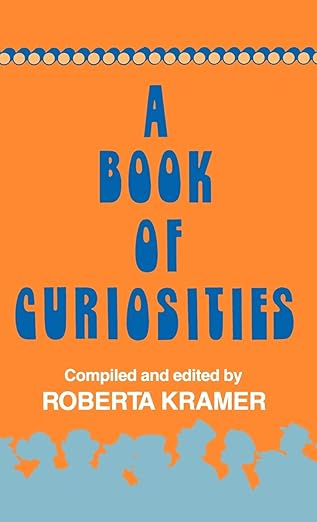

A Book of Curiosities by Roberta Kramer
There is something timeless about a question that begins with “Have you ever wondered…” That spark of curiosity — simple, innocent, and slightly mischievous — is exactly what powers A Book of Curiosities by Roberta Kramer.
Published by Jonathan David Publishers, this engaging volume is a celebration of wonder. At 176 pages, it invites readers to explore the kind of questions that linger in the mind long after childhood — questions about nature, science, perception, and the delightful mysteries hiding in plain sight.
The Joy of Asking “Why?”
Can flowers communicate?
When is an egg almost impossible to break?
Are there really two sides to a rainbow?
Do animals dream?
These aren’t just trivia questions. They’re doorways. Kramer approaches each topic with warmth and clarity, transforming everyday curiosities into moments of discovery. The book does not assume prior scientific knowledge, nor does it oversimplify. Instead, it strikes a thoughtful balance — accessible yet intelligent, lighthearted yet substantial.
In an age when answers are only a search engine away, A Book of Curiosities slows the pace. It encourages readers to linger in the question before rushing to the solution. That pause — that moment of wondering — is where the magic lives.
Curiosity as a Lifelong Companion
What makes this book particularly appealing is that it doesn’t target only children or only adults. It sits comfortably between generations. A parent and child can read it together. A teacher can draw discussion topics from it. An adult reader can rediscover the quiet thrill of learning something unexpected.
The structure of the book makes it easy to dip in and out. Each question stands on its own, making it perfect for bedside reading, classroom discussion, or even sparking conversation at the dinner table. There’s no required order. Just open to a page and begin.
This modular approach mirrors the very nature of curiosity itself — nonlinear, spontaneous, and often sparked by something seemingly small.
Science Meets Wonder
One of the book’s strengths is how it blends scientific explanation with narrative charm. The answers don’t feel clinical. They feel human. There is a sense that the author genuinely delights in the subject matter.
Take something as ordinary as an egg. Most of us never consider its structural strength. Yet understanding when it becomes “almost impossible to break” transforms an everyday object into an engineering marvel. The same is true for rainbows, plants, or animal behavior. Kramer gently reveals that the world is far more complex — and more beautiful — than it appears at first glance.
A Book for the Curious Mind
At its heart, A Book of Curiosities is less about specific answers and more about nurturing a mindset. Curiosity is not merely a trait; it is a practice. It keeps us mentally agile, creatively engaged, and open to new perspectives.
In a culture often driven by speed and certainty, a book devoted to thoughtful questioning feels refreshingly grounded. It reminds us that knowledge begins with wonder — and that even familiar things can surprise us when we look more closely.
Whether you are a lifelong learner, an educator, or simply someone who enjoys those small “aha” moments, A Book of Curiosities offers an invitation: stay curious.
Because sometimes the most powerful discoveries begin not with expertise, but with a simple question.